


Deepwater Rice - investigations into the yellow stem borer in Bangladesh - 5 - 1981 research - insecticide trials |
 |
An insecticide trial was carried out in a farmer's field, at Bastia, Manikganj (approximately in the centre of the field on the left, taken in April 1981). This was an area previously visited for population dynamics studies (Catling 1981). The field usually floods to a depth of 2-3 m. Stem infestation by yellow rice borer in 1977 and 1978 was more than 40% by the onset of flooding and reached 40-60% by late season in the four seasons 1977-1980. The field was broadcast-seeded in early March with the deepwater variety Digha. |
| The overall field dimensions were about 90 m x 30 m with a nearly
rectangular shape, which made it convenient to make 36 plots, each 15 m
x 6 m. Twelve treatments, including a nonsprayed control with three
replicates of each, were possible (see below for chemicals).
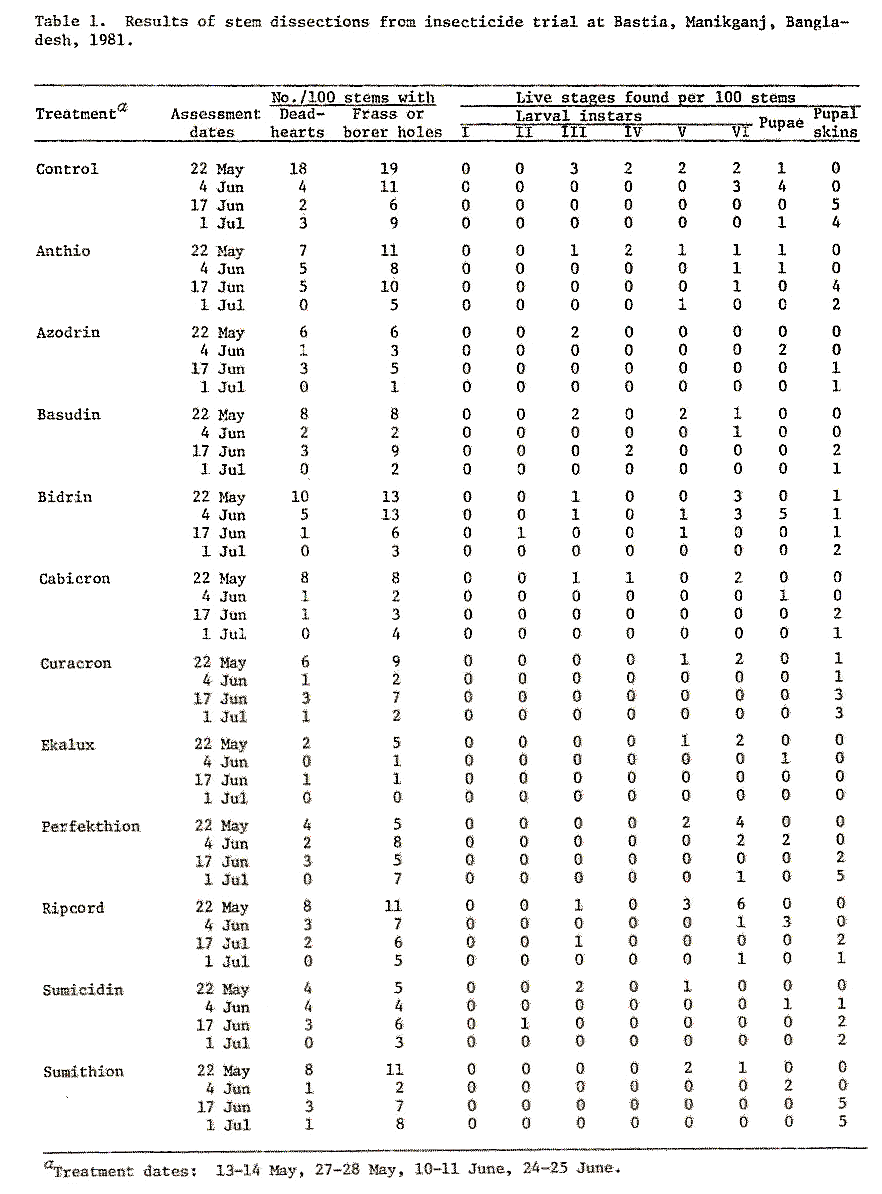
The first insecticide application was on 13-14 May, when plant height was about 45 cm. The average tiller count on 13 May was 374 tillers/m². Subsequent applications were on 27-28 May, 10-11 June, and 24-25 June. Plant height was about 50 cm on 27 May, and 110-125 cm on 24 June. The average tiller count on 4 June was 270/m². Stem sampling by taking 34 stems from each plot, with the sampler moving along the diagonals of the plot and taking care to keep away from the edges, was done 21 May, 4 June, 17 June, and 1 July. On the last date flooding had started and there was about 30 cm of water in the field. |
The Bastia site |
Table 1 presents data from stem dissections.

|
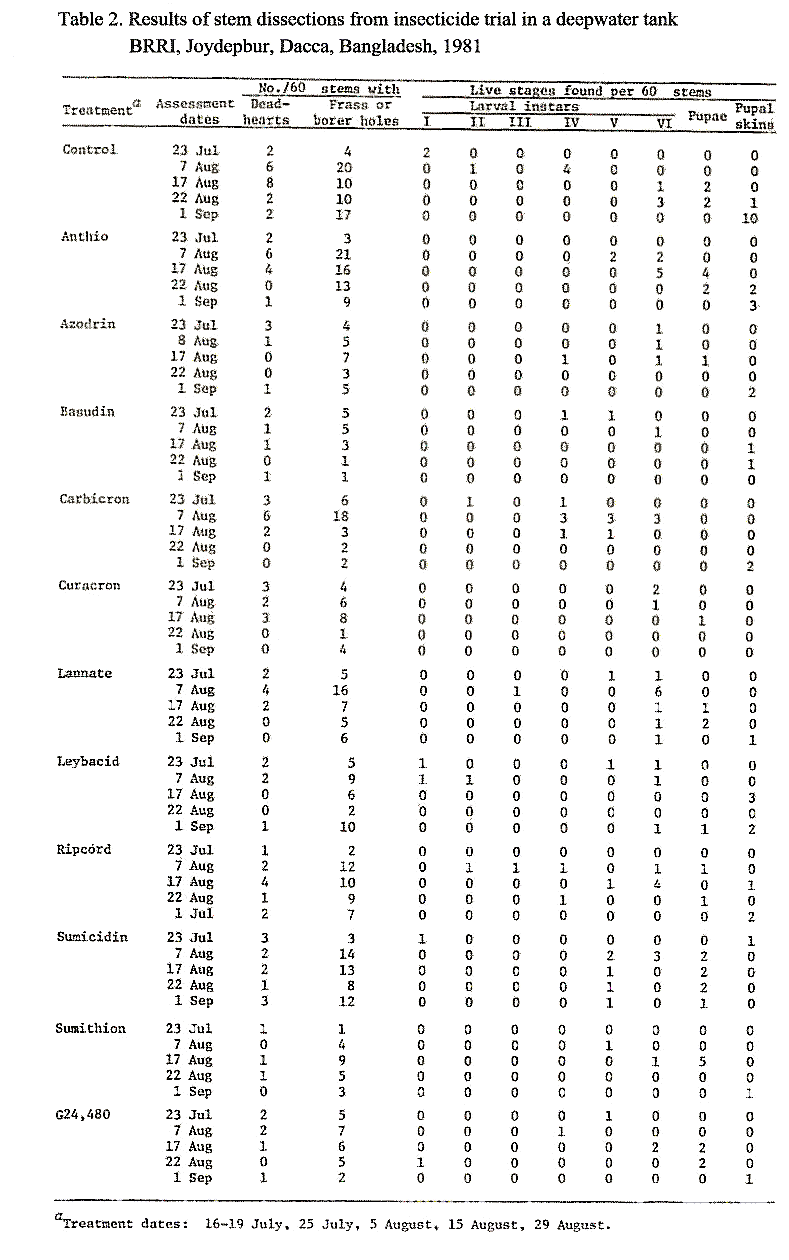
Another trial was put in a 20 m x 20m deepwater tank at BRRI, Joydebpur. The tank was divided into 36 plots 3 m x 3 m and each plot individually bunded to prevent water movement between plots. Because of delays in land preparation, only 3 blocks were planted: Raja Mondal was planted in two blocks and Habiganj Aman IV in one block. These were not flooded and served as a simple insecticide trial with no possibility of yield data. As at Bastia, 12 treatments were arranged randomly within the blocks. Each treatment was replicated three times. The first applications started 16 July but heavy rain interrupted work and the spraying was not completed until 19 July. Subsequent applications were made on 25 July, 5 August, 15 August, 29 August, and 9 September. Samples of 20 stems/plot were taken on 23 July, 7 August, 17 August, 22 August, 1 September, and 11 September. Data from the stem dissections are in Table 2. |
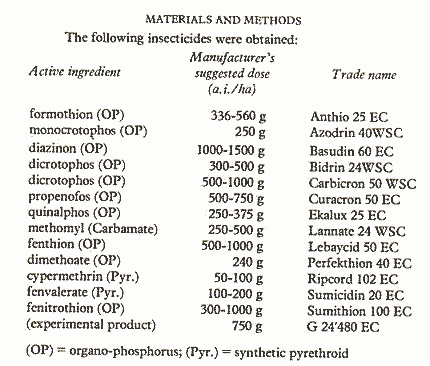
When first reporting the studies (at the 1981 Deepwater Rice Conference), we emphasized that the experiments were not complete. For instance, we had not harvested the plots at Bastia and hoped that might add considerably to the value of the season's work. Similarly, we stressed that our results should not be taken as an endorsement or condemnation of any insecticide used. A crude assessment, taking into consideration the number of live stages and the changes in stem infestation, suggested that the insecticides worth further evaluating were Azodrin, Basudin, Carbicron, Curacron, Ekalux, and Sumithion. Lannate was underdosed and a decision on it could not be made until the season was complete. While we were in agreement with Catling (1981) that insecticides alone were unlikely to be the whole solution, we felt our results indicated that there might well be a genuine place for insecticide use in deepwater rice. The major questions were what product and when it should be used?
 1981 research cont. - YSB population dynamics
| ©2000 - Brian Taylor CBiol FIBiol
FRES 11, Grazingfield, Wilford, Nottingham, NG11 7FN, U.K. Visiting Academic in the Department of Life Science, University of Nottingham |
href="\dwr\ysb2.htm"