
SUBFAMILY PONERINAE - Genus Anochetus
|
|
The Ants of
Africa SUBFAMILY PONERINAE - Genus Anochetus |
| Contents - Ponerinae - PONERINAE Introduction |
In Tribe PONERINI
Diagnostic Features - Similar to Odontomachus but with the apical mandibular armament with the dorsalmost tooth acute and the petiolar node not ending dorsally in a spine. See Brown (1978c).
Anochetus Mayr (1861: 53; type species Anochetus ghilianii as Odontomachus
ghilianii Spinola, 1851b: 55, by monotypy);
junior synonym Stenomyrmex Mayr (1862: 711; type species Myrmecia
emarginata, by subsequent designation of Wheeler (1911f: 173; type
location Central America); synonymy by Brown (1978c: 552).
Mayr's (1861) genus description is at 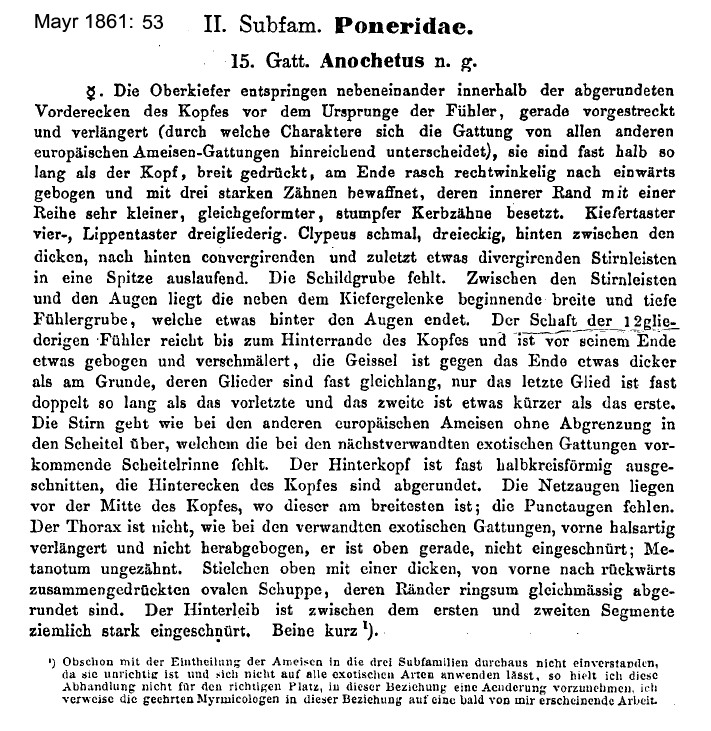 ; and his (1896) definiton of the male at
 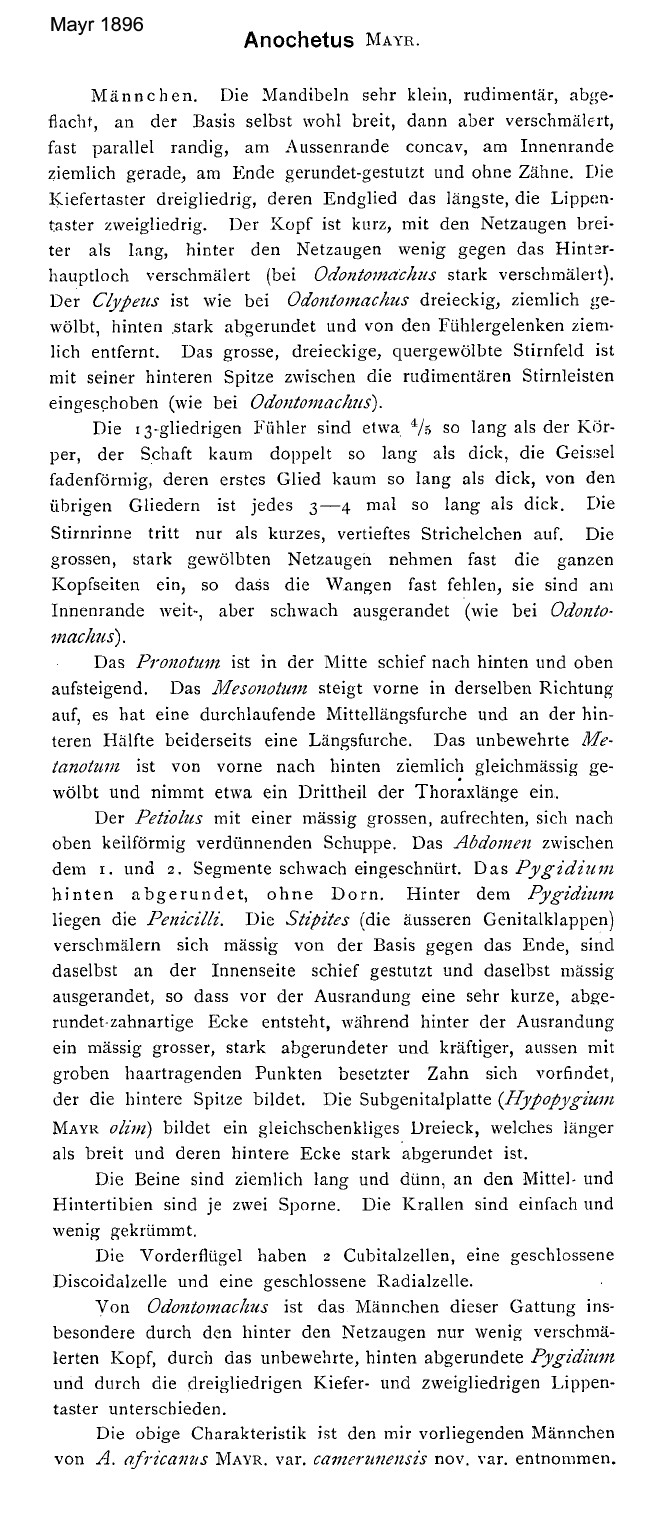 .
.
Brown (1978c) revised the genus and I have followed his synonymies
and so-on. The revision is poor on descriptions, etc., and leaves much
to be desired. For instance, one gets the impression that he paid
little attention to the work of Bernard (1952). What little is known of
their general biology was summarised by Brown (1978c). The colony size
is of the order of 100 individuals, usually in cryptic sites - rotten
or hollow twigs, under bark, etc. Some including pellucidus and
fulginosus apparently are more or less arboreal. Most forage
after dark, often widely, and all certainly are predaceous. If attacked
their general response is to feign death. Probably all are predaceous,
utilising a trap-jaw mechanism to seize prey and to "jump" backwards.
Brown (1978c) regarded the genus as most likely having its origin in
the
Old World wet tropics, with arid-country species restricted to that
global area. Brown's key is at 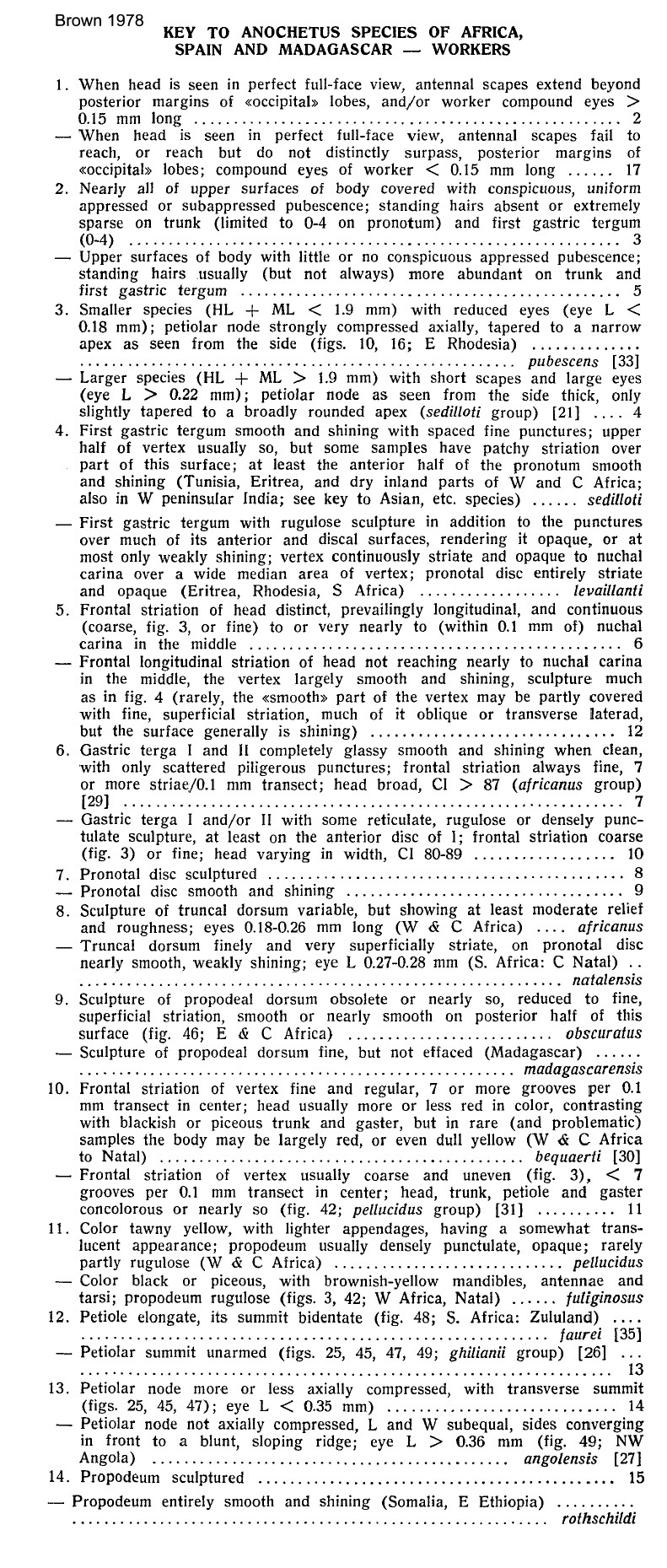 and
and 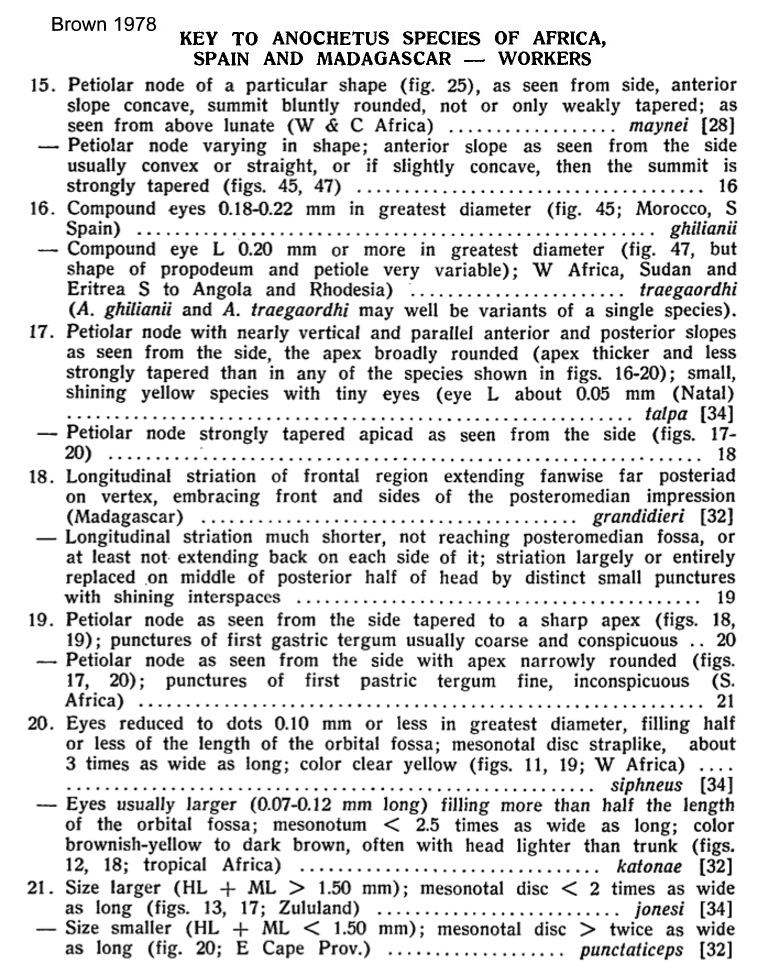 .
.
Examples of queens and males can be seen on Anochetus katonae, Anochetus pellucidus and Anochetus species Sevare
Key to workers of species from Africa
Developed from Brown (1978c); note CI = 100 X HW/HL but in my
experience it is not a reliable index; HL in the key includes mandibles.
| 0 | 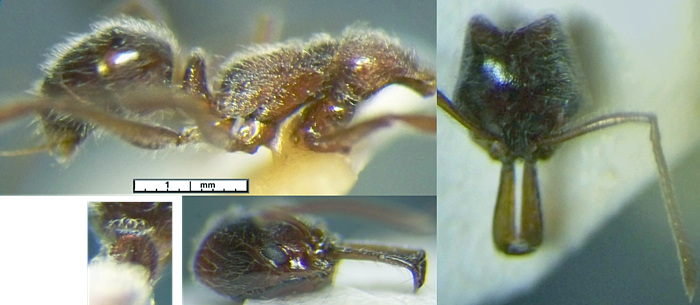 Wholly
unique in having a dense covering of semi-decumbent fine pilosity all
over, including the legs and scapes; inner margin of mandibles with two
distinct edges; petiole with a moderately thick profile with a rounded
apex, in front view the upper margin is weakly concave; TL ca 5 mm,
eyes ca 0.27 Wholly
unique in having a dense covering of semi-decumbent fine pilosity all
over, including the legs and scapes; inner margin of mandibles with two
distinct edges; petiole with a moderately thick profile with a rounded
apex, in front view the upper margin is weakly concave; TL ca 5 mm,
eyes ca 0.27 |
Cameroun - Anochetus
hirsutus
nsp |
| 1 | 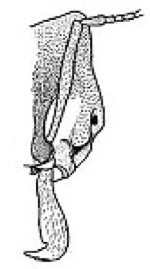 In
full face view, antennal scapes fail to reach posterior margin of
occipital lobes, eyes < 0.15 mm In
full face view, antennal scapes fail to reach posterior margin of
occipital lobes, eyes < 0.15 mm |
2 |
| -- | 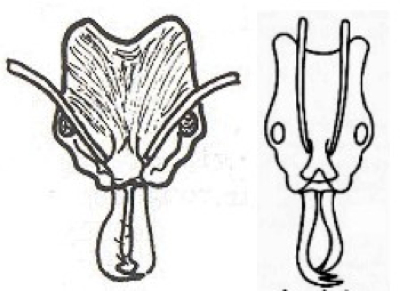 In full
face view antennal scapes extend
beyond posterior margins of occipital lobes and/or compound eyes >
0.15 mm long In full
face view antennal scapes extend
beyond posterior margins of occipital lobes and/or compound eyes >
0.15 mm long |
6 |
| 2 | 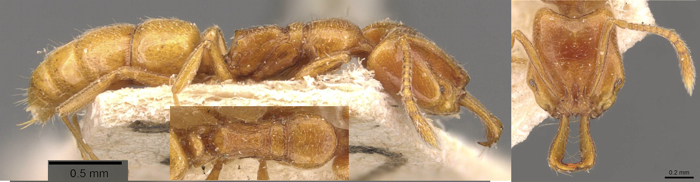 Petiole node in lateral view
quite thick with near parallel sides; TL 3.5-3.9 mm; slightly
reddish-yellow Petiole node in lateral view
quite thick with near parallel sides; TL 3.5-3.9 mm; slightly
reddish-yellow |
South Africa - talpa |
| -- | 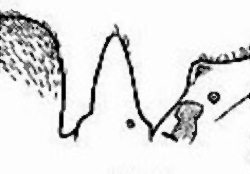 Petiole
node in lateral view strongly tapered from bottom to top Petiole
node in lateral view strongly tapered from bottom to top |
3 |
| 3 | Petiolar node in lateral view with apex narrowly rounded (as preceding), puncturation of first gastric tergum fine and inconspicuous | 4 |
| -- | 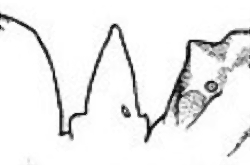 Petiolar node
in lateral view tapered to a sharp apex,
puncturation of first gastric tergum usually coarse and conspicuous Petiolar node
in lateral view tapered to a sharp apex,
puncturation of first gastric tergum usually coarse and conspicuous |
5 |
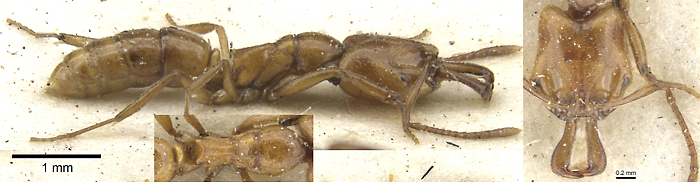
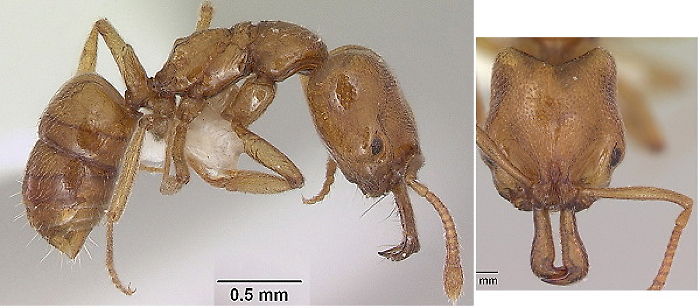
| 4 | 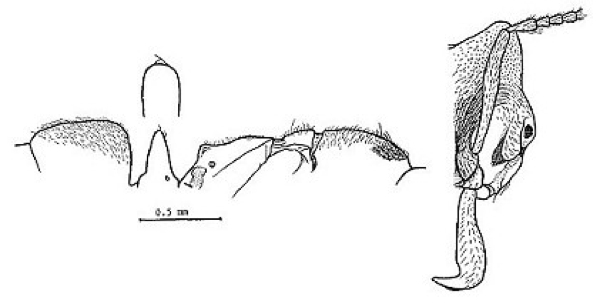 HL (including
mandibles) > 1.50 mm; petiole in anterior
view with narrow rounded apex; TL 4.5-4.8 mm; yellowish brown,
alitrunk, antennae and mandibles reddish brown HL (including
mandibles) > 1.50 mm; petiole in anterior
view with narrow rounded apex; TL 4.5-4.8 mm; yellowish brown,
alitrunk, antennae and mandibles reddish brown |
. |
| . |  |
South Africa - jonesi |
| -- | 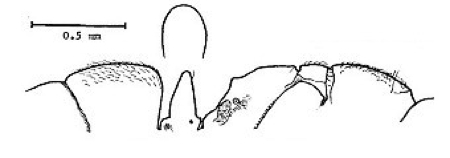 HL
(including mandibles) < 1.50 mm;
petiole in anterior view with wide rounded apex; TL 3.7-3.8 mm;
reddish-yellow, shiny HL
(including mandibles) < 1.50 mm;
petiole in anterior view with wide rounded apex; TL 3.7-3.8 mm;
reddish-yellow, shiny |
. |
| . |  |
South Africa - punctaticeps |
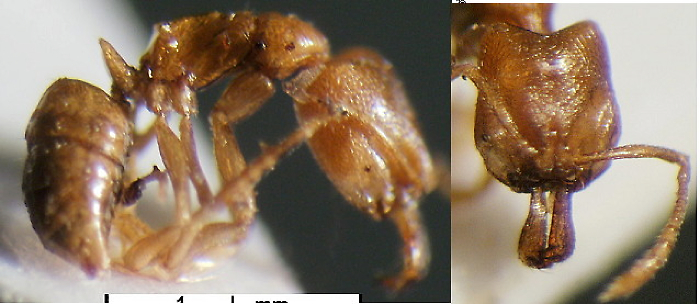
| 5 | 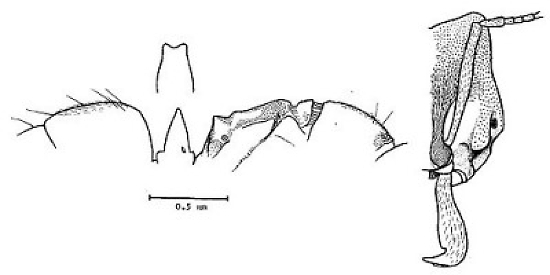 Eyes
reduced to dots 0.10 mm or less in greatest diameter, filling half or
less of the length of the orbital fossa; mesonotal disc straplike,
about three times as wide as long; TL 3.9-4.4 mm; colour clear yellow Eyes
reduced to dots 0.10 mm or less in greatest diameter, filling half or
less of the length of the orbital fossa; mesonotal disc straplike,
about three times as wide as long; TL 3.9-4.4 mm; colour clear yellow |
. |
| . |  |
West Africa & Gabon - siphneus |
| -- | 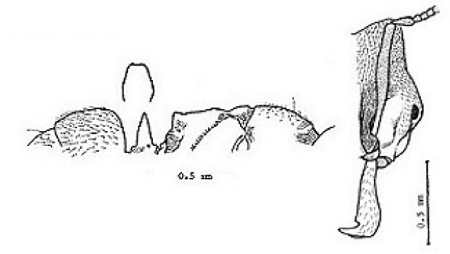 Eyes
usually larger (0.07-0.12 mm long) filling more than half the length of
the orbital fossa; mesonotum < 2.5 times as wide as long; TL 3.3-3.5
mm; colour brownish-yellow to dark brown, head often lighter Eyes
usually larger (0.07-0.12 mm long) filling more than half the length of
the orbital fossa; mesonotum < 2.5 times as wide as long; TL 3.3-3.5
mm; colour brownish-yellow to dark brown, head often lighter |
. |
| . | 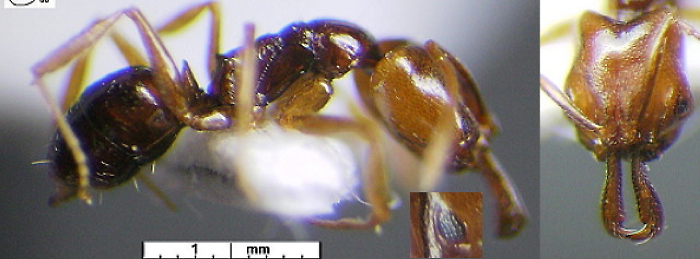 |
Pan-African - katonae |
 |
relatively long antennal scapes and larger eyes | -- |
| 6 | 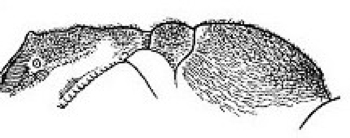 Upper surfaces of
body with conspicuous uniform appressed
or subappressed pubescence; standing hairs absent or extremely sparse Upper surfaces of
body with conspicuous uniform appressed
or subappressed pubescence; standing hairs absent or extremely sparse |
7 |
| -- | Upper surfaces of body with little or no appressed pubescence, standing hairs usually more abundant | 9 |
| 7 | 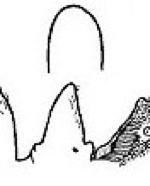 Small, HL < 1.9
mm, with reduced eyes; petiole node a
narrow tapering scale in lateral view; TL 4.9 mm; castaneous, gaster
darker Small, HL < 1.9
mm, with reduced eyes; petiole node a
narrow tapering scale in lateral view; TL 4.9 mm; castaneous, gaster
darker |
. |
| . | 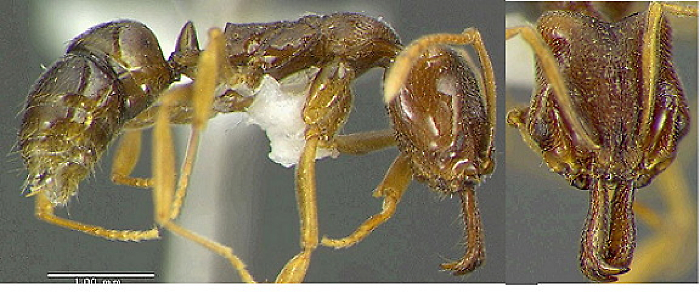 |
eastern Africa - pubescens |
| -- | 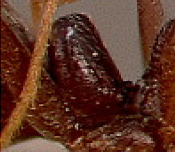 Larger, HL >
1.9 mm, large eyes; petiole node a thick
scale in lateral view Larger, HL >
1.9 mm, large eyes; petiole node a thick
scale in lateral view |
8 |
| 8 | 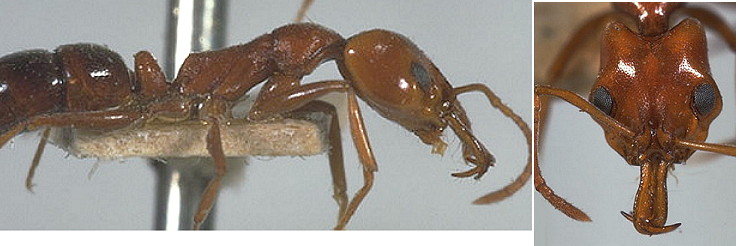 First
tergite of gaster and most of rest of body smooth and shining; TL
6.0-6.5 mm; dull ferruginous, gaster darker First
tergite of gaster and most of rest of body smooth and shining; TL
6.0-6.5 mm; dull ferruginous, gaster darker |
northern savannah - sedilloti |
| -- | 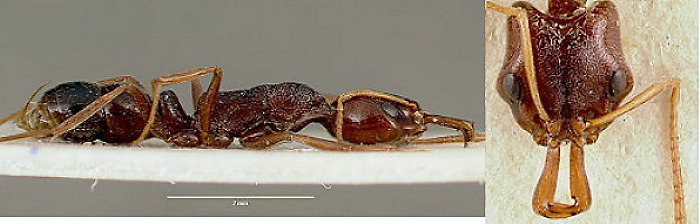 First
tergite of gaster with rugulose sculpture, rest of body dull, much
striated; TL 5.2-6.0 mm; mostly rich dark red, gaster with basal
segment castaneous and rest piceous to black First
tergite of gaster with rugulose sculpture, rest of body dull, much
striated; TL 5.2-6.0 mm; mostly rich dark red, gaster with basal
segment castaneous and rest piceous to black |
east and southern Africa - levaillanti |
|
Generally lacking pubescence | -- |
| 9 | 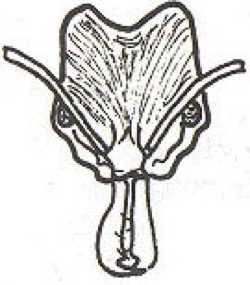 Frontal
striation of head distinct, prevailingly longitudinal and continuous to
or very nearly to the nuchal carina in the middle Frontal
striation of head distinct, prevailingly longitudinal and continuous to
or very nearly to the nuchal carina in the middle |
10 |
| -- | 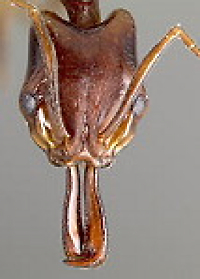 Frontal
longitudinal striation of head not reaching nearly to nuchal carina,
the vertex largely smooth and shining Frontal
longitudinal striation of head not reaching nearly to nuchal carina,
the vertex largely smooth and shining |
15 |
| 10 | Gastric terga I and II completely glassy smooth and shining, only scattered puncturation; frontal striation always fine, seven or more striae/0.1 mm transect; head broad CI > 87 | 11 |
| -- | Gastric terga I and II with some reticulate, rugulose or dense punctulate sculpture; frontal striation of head coarse or fine, head varying in width, CI 80-89 | 13 |
| 11 | 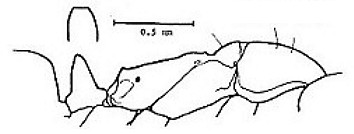 Dorsum
of pronotum smooth and shiny; black with head and appendages reddish Dorsum
of pronotum smooth and shiny; black with head and appendages reddish |
. |
| . | 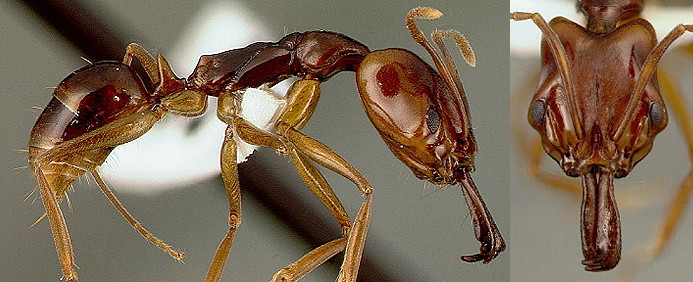 |
East & Central Africa - obscuratus |
| -- | Dorsum of pronotum sculptured | 12 |
| 12 | 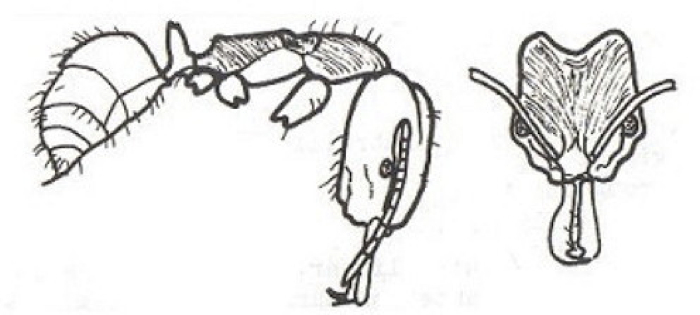 Dorsal
alitrunk with variable moderate sculpturation; eyes 0.18-0.26 mm long;
TL 5.7 mm; castaneous but legs yellow Dorsal
alitrunk with variable moderate sculpturation; eyes 0.18-0.26 mm long;
TL 5.7 mm; castaneous but legs yellow |
. |
| . | 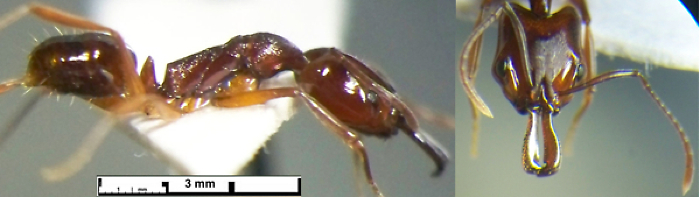 |
West Africa & Congo Basin, east into Uganda forests - africanus |
| -- | 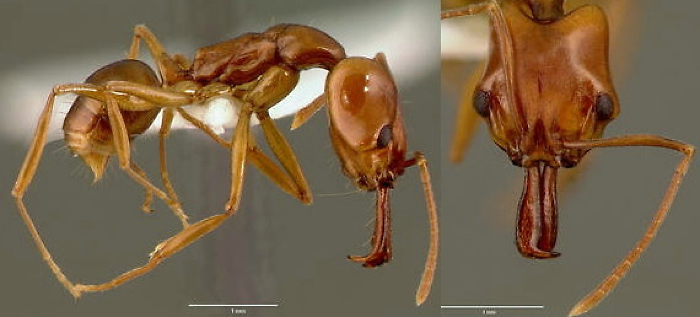 Dorsal
alitrunk with fine superficial striation, pronotum near smooth; eye
0.27-0.28; TL 5.9 mm; head dark reddish-amber, alitrunk and gaster
castaneous brown, legs paler Dorsal
alitrunk with fine superficial striation, pronotum near smooth; eye
0.27-0.28; TL 5.9 mm; head dark reddish-amber, alitrunk and gaster
castaneous brown, legs paler |
South Africa - natalensis |
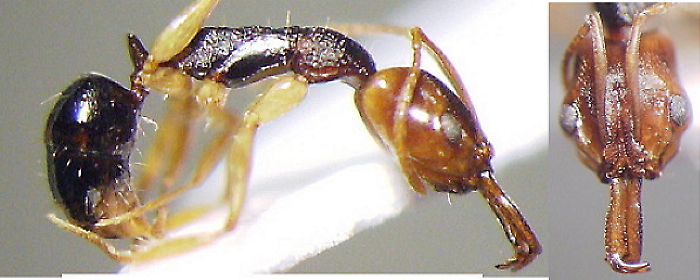
| 13 | 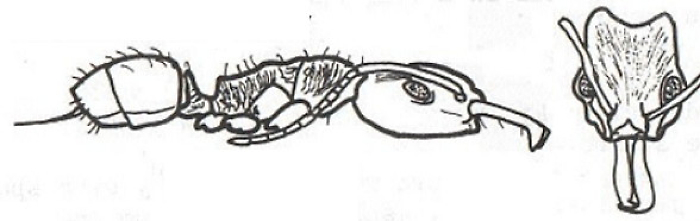 Frontal
striation of vertex fine and regular; head more or less red in colour,
body darker; TL West Africa 4.6 mm, TL South Africa 5.3-5.5 mm Frontal
striation of vertex fine and regular; head more or less red in colour,
body darker; TL West Africa 4.6 mm, TL South Africa 5.3-5.5 mm |
. |
| . |  |
West Africa & Congo Basin - bequaerti |
| -- | 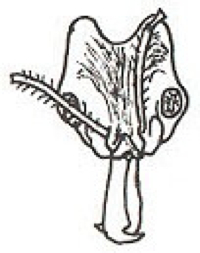 Frontal striation
usually coarse and uneven; head and body
concolorous Frontal striation
usually coarse and uneven; head and body
concolorous |
14 |
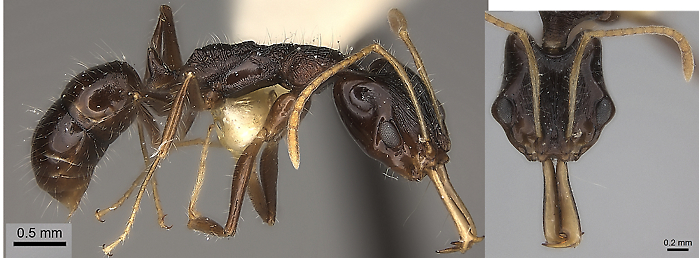
| 14 | 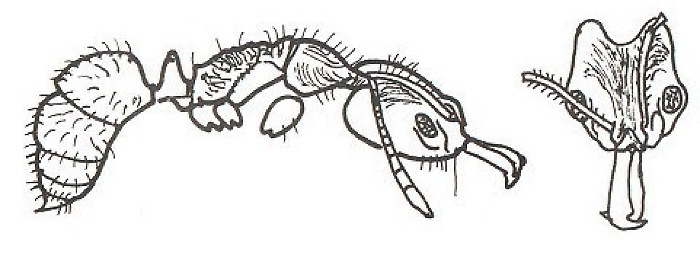 Colour
black or piceous, with brownish-yellow mandibles, antennae and tarsi;
propodeum rugulose; TL ca 6.0 mm Colour
black or piceous, with brownish-yellow mandibles, antennae and tarsi;
propodeum rugulose; TL ca 6.0 mm |
. |
| . |  |
pan-African - fuliginosus |
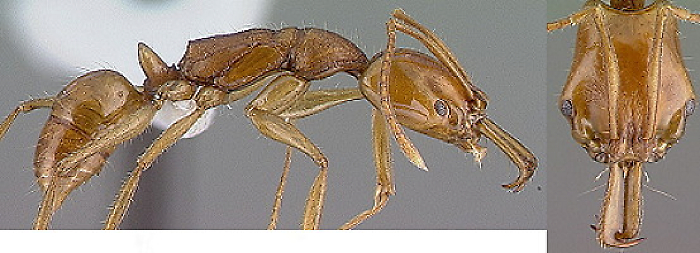
| -- | 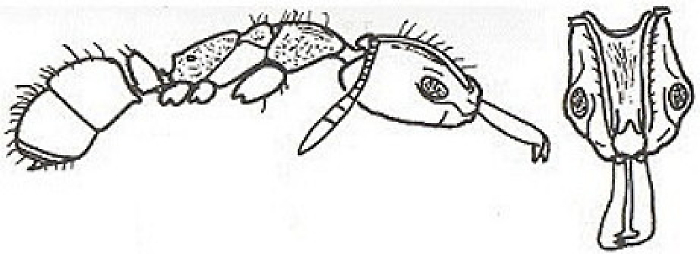 Colour
tawny-yellow, with lighter appendages, having a somewhat translucent
appearance; propodeum usually densely punctate, opaque; rarely partly
rugulose; TL ca 5.0 mm Colour
tawny-yellow, with lighter appendages, having a somewhat translucent
appearance; propodeum usually densely punctate, opaque; rarely partly
rugulose; TL ca 5.0 mm |
. |
| . |  |
West Africa & Congo Basin - pellucidus |
|
--Head with short or no longitudinal striation | -- |
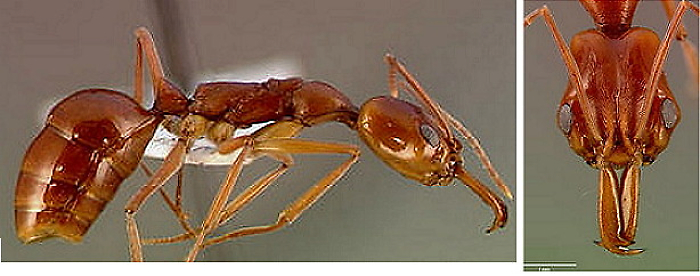
| 15 | 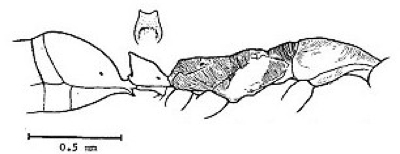 Petiole
elongate, with bidentate summit; TL 10 mm; pale to reddish pale brown Petiole
elongate, with bidentate summit; TL 10 mm; pale to reddish pale brown |
. |
| . |  |
South Africa - faurei |
| -- | Petiole summit unarmed | 16 |
| 16 | 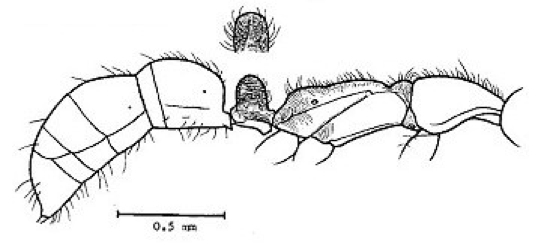 Petiole node in
lateral view thick with rounded apex; eye
> 0.35 mm long; TL 8.3-9.1 mm; dull brownish yellow Petiole node in
lateral view thick with rounded apex; eye
> 0.35 mm long; TL 8.3-9.1 mm; dull brownish yellow |
. |
| . | 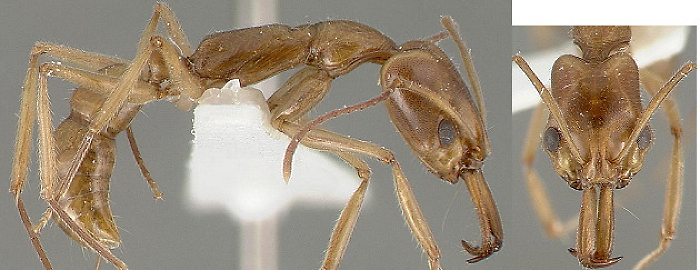 |
Angola - angolensis |
| -- | Petiole node compressed with level apex; eyes < 0.35 mm long | 17 |
| 17 | 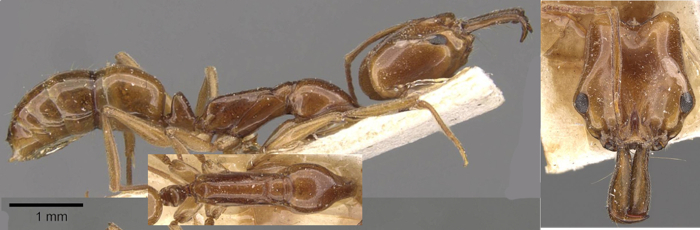 Propodeum entirely smooth and
shining; TL ca 6.0 mm; pale brownish or yellowish red, appendages
yellowish Propodeum entirely smooth and
shining; TL ca 6.0 mm; pale brownish or yellowish red, appendages
yellowish |
North-east Africa west to Senegal - rothschildi |
| -- | Propodeum sculptured | 18 |
| 18 | 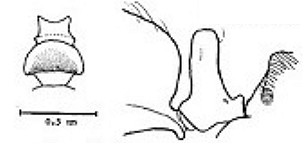 Petiole
node in profile peg-like, anterior slope rounded, summit bluntly
rounded, seen from above lunate, mostly dull yellow, trunk darker Petiole
node in profile peg-like, anterior slope rounded, summit bluntly
rounded, seen from above lunate, mostly dull yellow, trunk darkerNote this definition (Brown, 1978) is for workers that differ markedly from the type queen. |
. |
| . | 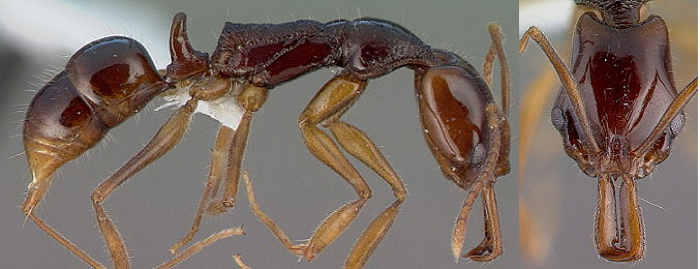 |
West Africa & Congo Basin - maynei |
| Note:
the separation that follows appears to be far from definitive with a
considerable variation in form, eye size, pubescence, etc. |
||
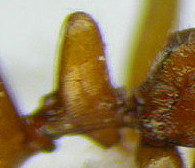
| -- | 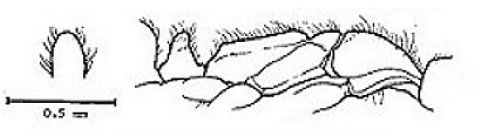 Petiole
node variable, anterior slope usually convex or straight, or if
slightly concave summit strongly tapered; TL 6.8 mm; brownish red-gold Petiole
node variable, anterior slope usually convex or straight, or if
slightly concave summit strongly tapered; TL 6.8 mm; brownish red-gold |
. |
| . | 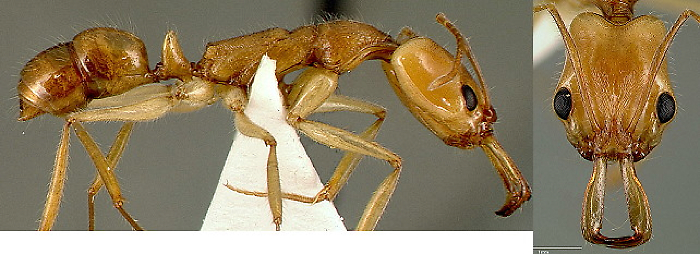 |
pan-African - traegaordhi |
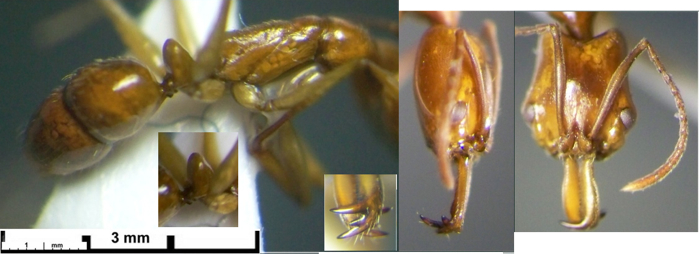
| -- | 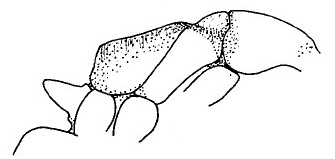 TL ca 6.5 mm; petiole
node subtriangular with the summit narrowly but bluntly
rounded; shiny brownish yellow, gaster slightly darker; with only very
short inconspicuous pubescence and almost no erect hairs TL ca 6.5 mm; petiole
node subtriangular with the summit narrowly but bluntly
rounded; shiny brownish yellow, gaster slightly darker; with only very
short inconspicuous pubescence and almost no erect hairs |
. |
| . |  |
Congo Basin - sudanicus |
| -- |  Eye small, length generally less than 0.20 mm Eye small, length generally less than 0.20 mm |
. |
| . | 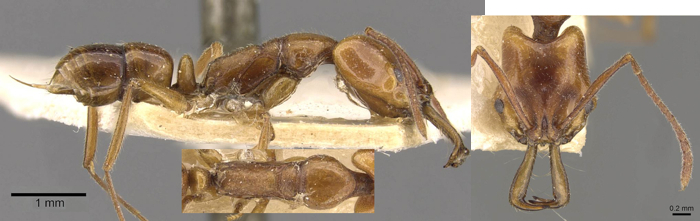 |
Spain, North Africa & Senegal (?) - ghilianii |
Anochetus new speciesFour specimens were found in two leaf litter samples from logged sites at Atewa Forest Reserve, Ghana (Belshaw & Bolton, 1994b). |
 |
PONERINAE Introduction |
© 2007, 2008, 2009, 2010, 2011, 2013 - Brian Taylor
CBiol
FSB FRES 11, Grazingfield, Wilford, Nottingham, NG11 7FN, U.K. |
href="anochetus.htm"